How To Wash Gore-Tex Hunting and Fishing Gear

How To Wash Gore-Tex Hunting and Fishing Gear

Learn how to maintain your waterproof clothing so it keeps you warm and dry every season

The weather forecast called for sunny skies a high of 83 degrees. Instead, it’s minus-25 and starting to snow, and the wind-chill factor is enough to make a longshoreman blush. Underneath my rain suit, I’m dressed in a t-shirt and jeans. Without base-layers or insulation, I’ll be dead—frozen solid—in a couple of hours.

Fortunately, only a step away there is a warm and dry place where I can retreat—because while these ice-cold conditions are harsh, they’re only a simulation. I’m at the Gore headquarters in Delaware. More specifically, I’m inside the Environmental Chamber of the company’s biophysics lab, where Gore tests all of their gear by subjecting it to extreme temperatures (-58 to 122 degrees), simulated rain showers, UV-light damage, and other environmental stressors. Another way to put it: This is where Gore puts every new Gore-Tex product through their own version of hell. They burn gear, freeze it, stretch it, grind it, and expose it to things like saltwater, gasoline, and human sweat—then they rinse it off and do the tests all over again. Grundens is collaborating with Gore this year to bring out an awesome new line of fishing bibs and jackets. They invited us to test out the new gear, and to see how Gore-Tex is made.

If you hunt or fish, chances are, at least once in your life, you’ve gotten soaking wet—and were so miserable that you probably wondered, briefly, why you bother spending time in the outdoors. Good, dependable rain gearand waterproof boots are things we learn to appreciate the hard way.

When it comes to waterproof gear, it’s hard to beat Gore-tex. And even though I have been using Gore-Tex gear for years, I never appreciated just how innovative, and durable, this clothing was before my trip to Gore HQ. I also didn’t realize how simple it is to clean and maintain my waterproof gear and keep it working properly for years to come.

0w3sF7cxf2VFhOX3cdIy2
Captain Wild Bill Wichrowski and angler Claus Claesson trying to stay warm in the Environmental Chamber. Grundens

How Is Gore-Tex Made?

Gore-Tex, and the material it is made from, actually come from a rock—or rather a mineral called fluorspar. It gets ground to a powder, baked into a soft doughy polymer, and then stretched into fabric. This fabric is called ePTFE (or expanded PTFE), and it’s a lot like the Teflon plumbers tape (used for sealing the threads on pipe) that’s commonly found at the hardware store.

Gore took ePTFE and explored possibilities for any application they could think of. It became a launchpad for many products, including life-saving medical devices and the membrane found in Gore-Tex jackets, pants, bivy bags, and more. The ePTFE was perfect for clothing because it could keep water and wind out while still allowing air to escape through microscopic pores.

7InpajI5YBarxL4NtgNiFE
Gore-Tex is made from the mineral fluorspar. Alusruvi / Pixabay

Our bodies can produce up to 1 liter of sweat per hour and the tiny holes in a Gore-Tex membrane allow sweat to evaporate and escape. At the same time, they are too small for larger water molecules or wind to pass through. What you get is a waterproof, windproof membrane that breathes and adjusts to your body’s fluctuating temperature.

The membrane isn’t strong enough to hold up to the constant wear and tear that a piece of clothing experiences, so Gore laminates it onto different kinds of fabric for warmth and support. The fabric then gets another waterproof coating on the outside called Durable Water Repellent (DWR), and every seam–where a needle and thread punches through–gets glued and taped. Gore-Tex needs to be sewn and taped in a specific way, and Gore inspects every facility that does this.

Is it OK to Wash Gore-Tex Clothing?

After our spin in the gear torture-chamber, we all took off our rain gear and headed upstairs to a room that was remarkably less high-tech than the Environmental Chamber—but still sort of unbelievable: a room filled with 200 washing machines. I’m not exactly sure why, but I never thought you were supposed to wash Gore-Tex. I just assumed that running the clothes through a washer would destroy the waterproofing, so I have never cleaned any of my Gore-Tex gear.

6XRmLMOyuS1crEL0If8NRt
Some new Grundens rain gear holding up to a heavy downpour in the Gore-Tex Rain Room. Grundens

Turns out, I wasn’t alone here. The folks at Gore told us that many people aren’t aware that washing Gore-Tex is actually good for the gear. When it gets dirty, the microscopic pores that are so important for breathability get clogged, and the garment no longer performs to its full potential. The easy fix—and one that is often overlooked—is simply to wash it and unclog the pores. The DWR coating is also available in many stores and online, and with a wash and a new application, your Gore-Tex will be ready for more gale-force winds and whatever else the Mother Nature throws at you.

Imagine my delight when I realized that all of my smelly, mud-encrusted hunting gear, crammed in tote boxes in my basement, could be washed—and worn in public again.

You could wait until your Gore-Tex is as dirty as mine (and by that, I mean dirty enough to walk out the door and go hunting all by itself), or you could look for a couple of telltale signs that your gear is ready to be washed: If water stops beading up on the outside and starts soaking into the fabric… If dirt is ground into high-wear areas like the cuffs and elbows… If sweat has discolored any part of the garment… These are all good indicators that it’s time to pick up some extra DWR, and give your gear a good wash per the instructions below.

How to Clean Gore-Tex at Home in a Washing Machine

Step 1: Use one capful of liquid detergent and set the machine to warm permanent press cycle (105 degrees F/40 degrees C). Make sure not to use any powder detergent, fabric softener, or bleach.

Step 2: Check the pockets on your Gore-Tex gear before zipping them all shut along with any other zipper on the garment. Add the garment and select the low-spin option, then wash. Rinse twice before hanging it to dry.

Step 4: Once the garment is dry, put it in the dryer for 20 minutes to reactivate and condition the DWR. If a dryer isn’t available, iron the garment on a warm, gentle setting without steam, and make sure to use a towel between the garment and the iron.

Step 5: Apply a DWR spray repellent or a DWR wash-in solution and tumble-dry again for 20 minutes on low.

Written by Matthew Every for Field & Stream and legally licensed through the Matcha publisher network. Please direct all licensing questions to legal@getmatcha.com.

Featured image provided by Field & Stream
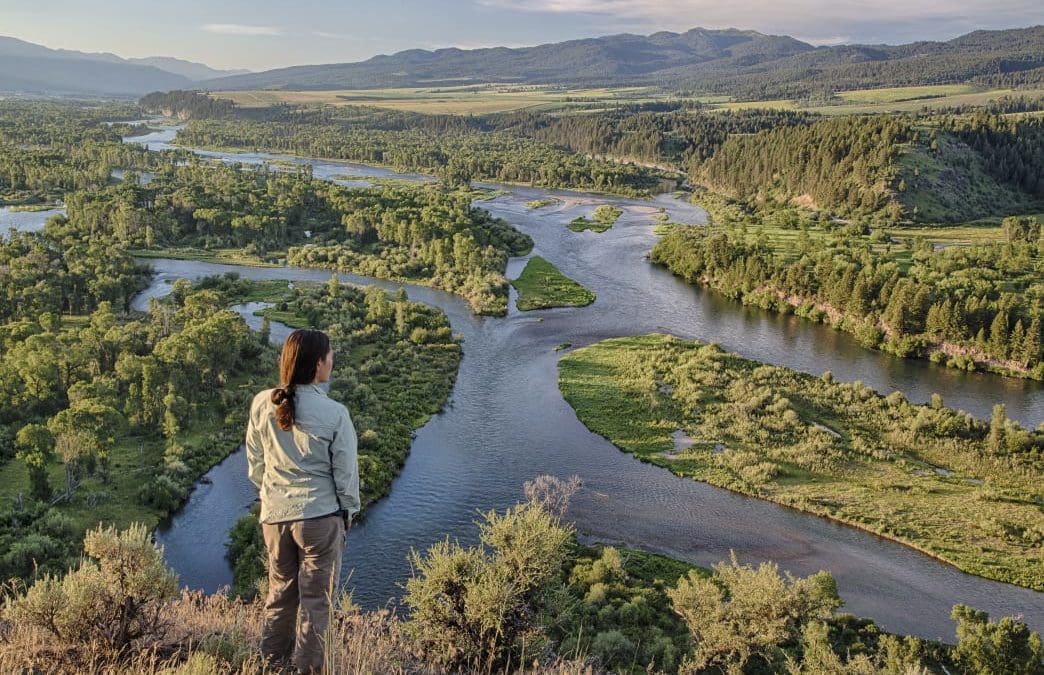
Hunting Down the Trout of a Lifetime on Idaho’s Snake River

Hunting Down the Trout of a Lifetime on Idaho’s Snake River

Idaho’s Snake River system is no secret, but it is often overshadowed by other fishing spots in the area. This rings especially true for the river’s mainstem in Idaho. Big water means big fish, but casting into larger rivers can be intimidating on first glance. Large trophy trout flourish in several different environments—and the Snake is one of most reliable for landing a prized catch.

There are only a few incredible gems like the Snake, with the biomass to regularly produce large fish in a diverse ecosystem. On the Snake, you can fish the Henry’s Fork Box Canyon for bruiser tailwater trout, the South Fork for some of the largest cutthroats in the west (with a nice mix of healthy brown trout), or you can scour the mainstem for that rare trophy brown, rainbow, or cutthroat that are rarely caught.

The Snake River system in Idaho offers everything from ultra-selective dry fly fishing to big streamers in big water, where every cast has the potential to move a wild monster.

Henry’s Fork

3wyOGAUfLWEA0QkQuQSGWc
Henry’s Fork is packed with large trout, including some over 24 inches. Dan

Dumping out of Henry’s Lake at Island Park, Idaho you will find the Henry’s Fork of the Snake. The short box canyon stretch located immediately below the dam is jam-packed with trout, and every year anglers reel in fish measuring more than 24 inches. Wade access is easy right below the dam by using the boat launch access site. Floating the canyon is also a popular way to spend a few hours. To make this float last half a day, you really have to back row or wade while holding the boat back.

After the Box Canyon you’ll encounter the Railroad Ranch stretch which is wade-only. The river looks and acts like a big spring creek with extremely challenging and selective trout. Bring your best midge and mayfly patterns for this area and make perfect presentations. It’s a challenging and rewarding piece of water. It’s also popular and busy in the summer months, making it a prime candidate for a shoulder-season trip. Fall is prime time, when the crowds dwindle and big brown trout begin moving more aggressively before the spawn.

Below Railroad Ranch the river has great volume and some beautiful water for floating or wading. It has that difficult element where you can find pods of 16-inch trout feeding on top, but you also know running a big streamer could produce a much larger specimen. Bring a few rods rigged with streamers and dry flies, and make that difficult choice when you hit the river. Warm Springs to Ashton is a great choice for fishing around here in the fall months.

South Fork

30miLmJQuQYmei4AI6aE4q
The South Fork is one of the healthiest cutthroat fisheries in the West. Zachary Collier

Like the Henry’s Fork, the South Fork begins below a dam, but it has that hybrid characteristic of a tailwater and freestone fishery. Flowing out of Palisades Reservoir on border of Idaho and Wyoming, the South Fork is a major attraction for anglers seeking dry fly bliss during the summer months. Acting as one of the healthiest cutthroat fisheries in the West, the South Fork is no secret, and it offers both float and wade fishing opportunities. To really tap into the potential of this river, you should fish from a drift boat or a raft.

Most anglers head to the South Fork for the world-class dry fly fishing for cutthroats, but approaching the river with the intent to target larger fish during the spring and fall months can sort out the bigger fish. And, there are some seriously big brown trout and even cutthroats that reach abnormal sizes in this river. During the prime summer fishing months, the cutthroat population is often readily competing over your fly, and these bigger fish are not seen.

The 64 miles of water below Palisades Dam make this less like a crowded tailwater and more like a long drainage with room to explore on foot and by boat.

Mainstem

3mMCl0GA5O8iGWGeAkmGqa
The Mainstem produces some of the Snake River’s largest trout. BLM Idaho

The Henry’s Fork and South Fork join to form the Mainstem Snake River. Far less popular than either fork among fly anglers, the Mainstem is a unique, large volume fishery with a much different dynamic than it’s contributing sources. Although less popular, this should not be overlooked as it produces some of the Snake River system’s largest trout. It also has a hatch of giant Hexagenia mayflies (unknown to many anglers) during the fall months. This hatch is comparable to salmo flies on the upper reaches, as it lures the largest trout in the river to a dry fly.

The main river experiences fluctuations from irrigation drawdown, and some of the most consistent fly fishing occurs during spring and fall when the irrigation lines are shut down. Consistent flows encourage access from jet and drift boats. Wade fishing is also possible, but much of the river runs through private land, and boats simply provide access to more water. Also, boats allow you to cover longer stretches and really search with streamer patterns.

The entire river, from the confluence to American Falls Reservoir, offers chances at large brown, rainbow, and cutthroat trout. The lower reaches here also offer excellent smallmouth bass and carp fishing. If you have the right gear, chasing sturgeon also becomes possible. Focusing on trout, however, is a great approach to spring and fall in the region.

41SXKFIfiMKIU06wQY6ii
The entire Snake River offers chances at large brown, rainbow, and cutthroat trout. BLM Idaho

Local expert Boots Allen has a reputation for landing big trout with consistency. His streamer game is excellent, and he points out that large, articulated streamers are very popular these days.

“I use them a lot throughout a given year,” says Allen. “However, I find moderately sized baitfish imitations to be more effective on the Snake and the South Fork during the shoulder seasons of October/November and March/April. The Chicklet and Arum's Lil' Kim are two of my favorites.”
Allen says that on the Snake his strategy is to target riffle pools, eddies, and seams separating main channel currents from dead current side channels. “This water is prime real estate for trout to pod up during the low flows of autumn and spring,” he says. “Slow to moderate retrieves is the name of the game. Streamers fishing during these shoulder months have been outperforming the summer months over the past several years.”

Approach the lower reaches of the Henry’s Fork, South Fork and the Mainstem all the way to American Falls Reservoir with a predatory attitude during the shoulder seasons and through the winter months as well. While you can find numbers and have big days, show up ready to cast sink tips and large streamers in search of one or two really large fish. If you come prepared you might find the trout of a lifetime while fly fishing the Snake river.

Written by Zach Lazzari for RootsRated in partnership with Yellowstone- Teton Territory and legally licensed through the Matcha publisher network. Please direct all licensing questions to legal@getmatcha.com.

Featured image provided by BLM Idaho

A Quick Guide To Central Montana’s Rivers

A Quick Guide To Central Montana’s Rivers

The rivers of Central Montana are unlike those found elsewhere in the state. Flowing from the mighty Rocky Mountains and several island mountain ranges, the waterways then meander downhill, eventually meeting the Great Plains in their gradual journey eastward. This diversity of terrain lends itself to a variety of streams and rivers—from smaller rivers such as the Sun and Judith to the sweeping expanse of the trout-laden Missouri. Central Montana is tailor-made for adventurous anglers seeking a bit of solitude away from busier rivers.

When most anglers think of fishing in Central Montana, the Missouri River comes to mind. This storied river first came to true popularity in the 1990s, when editorial coverage began to draw visitors from across the U.S. and abroad, seeking to experience "Trout Town U.S.A."

The most productive fishing section of the river flows from the small town of Craig to Cascade, just south of Great Falls. In this 35-mile section, the river sweeps through craggy cliffs and canyons before opening into the lower section where the river greets the Great Plains, both widening and slowing before reaching the community of Cascade.

The Missouri is a prolific fishery, with as many as 2,000 rainbow trout per river mile in some sections. Despite the high numbers of fish, it can be a technical fishery with "educated" fish; visiting anglers are best served by connecting with a local guide and outfitter service to help find the best spots and techniques. Intent on heading out on your own? Stop at a local shop, chat with the staff, and buy a few recommended flies.

2rQMiq6AxmAOCOuOKKY2y2
Most anglers venture to Central Montana dreaming of trophy trout, be it a colored-up brown or a football-like rainbow. Montana Office of Tourism and Business Development

In Cascade, check out the Trout Montana shop for gear and guides. You’ll also find lodging options in town along with groceries, restaurants, and bars. Great Falls, just 25 miles from Cascade, has a wide variety of lodging and dining options as well. North 40 Outfitters and Montana River Outfitters are based in Great Falls and can assist anglers seeking to set up trips and learn more about local waterways. Visit with the locals and they’ll point you to some lesser known streams like the Judith near Stanford or Big Spring Creek near Lewistown. The fishing community in Central Montana is tightly knit and eager to help.

Looking for something other than trout? As the Missouri winds northward and then east past Great Falls, it acts as home to a variety of species, including sauger, pike, walleye, and catfish. Other rivers and lakes throughout Central Montana host everything from perch to whitefish and carp.

Most anglers venture to Central Montana dreaming of trophy trout, be it a colored-up brown or a football-like rainbow. Those seeking classic dry-fly action will find the best times to visit are mid-spring (April/May), in July for terrestrial fishing, or in October. (Terrestrial lovers will find themselves happily occupied July through September; the river’s grassy banks are ideal for tossing big, foamy hoppers.) Nymph fishing, productive for those seeking high numbers of fish, is most productive in late spring (May/June) and then again in the early fall. Streamer anglers should visit in the early spring and late fall, though many seasoned Missouri River anglers are taking on the winter season with streamers to great success. If you’re planning to visit in the winter, reach out to Headhunters Fly Shop, which has established itself as the region’s leading Switch and Spey (two-handed fishing) resource and can offer both instruction and guided trips.

3lgAU5gUDmO4QuocEsAuA2
Central Montana offers plenty of stunning waterways. Montana Office of Tourism and Business Development

Many of Central Montana’s smaller rivers and streams are best fished on foot, allowing anglers to take their time and really work sections of water. However, for larger rivers such as the Missouri, it’s easy and effective to cover large sections of water via boat. Most local guides prefer hard-sided "drift boats," specially designed to allow anglers comfort and range of motion, and low-sided to not be pushed about too much by the wind. Rafts, pontoon boats, canoes and kayaks are also suitable for angling use—just make sure you have a savvy rower.

Whatever your angling style, Central Montana offers plenty of stunning waterways. Want to explore on foot and hike into small streams? Check. Keen to float down the famous Missouri River and chase fat rainbow trout? Check. Or maybe you want to get the kids out on Fresno Reservoir and simply let them experience their first fishing trip. That’s available, too. Central Montana is home to a high number of passionate anglers, eager to share their love for both sport and place.

Written by Jess McGlothlin for RootsRated in partnership with Central Montana and legally licensed through the Matcha publisher network. Please direct all licensing questions to legal@getmatcha.com.

Featured image provided by Todd Klassy/Central Montana

How to Fish at Night from a Belly Boat

How to Fish at Night from a Belly Boat

The secret weapon to catching summertime bass, panfish, and catfish? A float tube.

Fishing from a float tube under the summer stars puts you on the water when the fish are most active and your competition is tucked safely in the sack. But float smart. Stick to waters that are closed to boat traffic, or familiar waters where you know few motorboaters venture after nightfall. Carry at least two headlamps or flashlights—one with a dimmable colored light to preserve your night vision, and one white safety light. And night anglers should always wear a life jacket.

If you think you’ll freak out every time you brush against a weed patch, then wear lightweight breathable waders. Otherwise, pull on a pair of synthetic long pants, strap on float-tubing fins, and resist the temptation to launch right at sunset. Give the fish an hour or two to adjust to the changing light and move into a blackout feeding pattern—then target these three areas on the water.

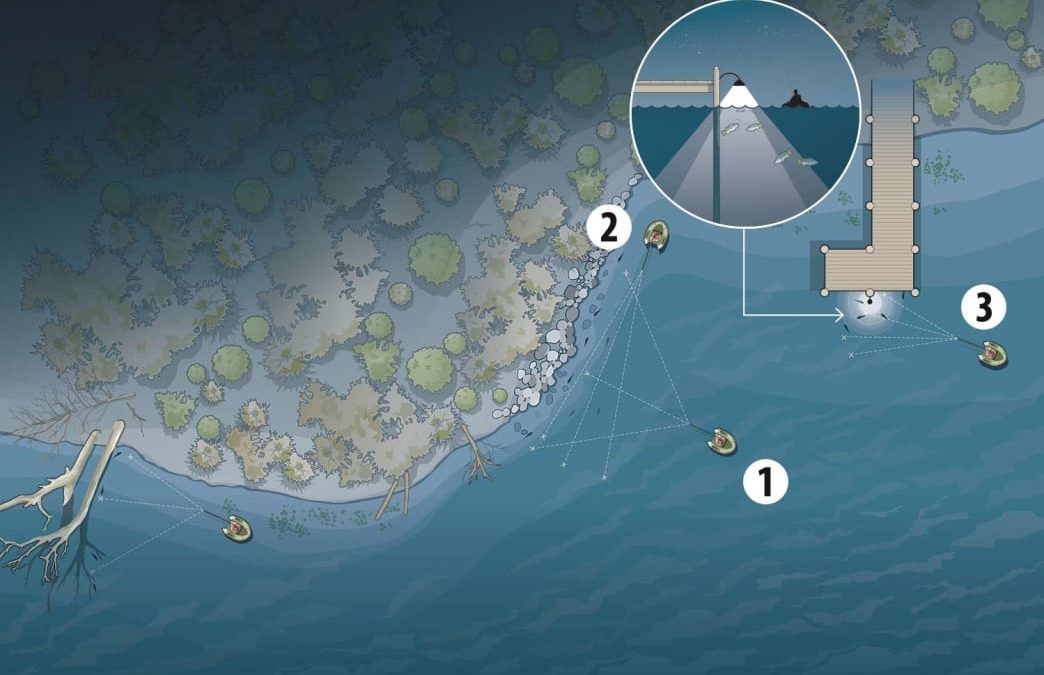
1. Get in the Weeds

At night, float-tubers have a leg up—or maybe down—with their stealthy approach to fallen trees, weedlines, and other natural structures. Once you’re in casting range, let the ripples dissipate to put fish at ease, then cast into the structure. Use swimming buzzbaits or spinnerbaits with a water-gurgling Colorado blade at a slow and steady rate to give fish a chance to strike. Don’t be afraid to go deep. Bigger fish will move off their daytime sanctuaries to prowl sloping bottoms and channels near grass beds and timbered shores.

2. Rock On

Riprap is ideal nighttime fishing structure because it is full of prey species that come out after dark. Once the sun sets, minnows and crayfish slip out of their rocky nooks and crannies, and predators such as bass and whopper panfish cruise the riprap for a late-night meal. Start by hanging back from the shoreline and pounding the rocks with crayfish-colored jigs. Then belly-boat all the way up to the riprap to fire crankbaits and spinnerbaits parallel to the structure, giving fish a second chance to make your night.

3. Light It Up

Any well-lit dock, bridge, or pier is a night angler’s dream, but you can’t just barrel in to pound the brightest spot. Light travels through the water in the shape of an inverted cone, so be aware of the illuminated water that extends out beyond the lit surface. Position yourself well away from that area to dredge midcolumn depths first, casting large streamers or jerkbaits with erratic movements. Once you’ve picked off the subsurface feeders, it’s time to froth the top with buzzbaits, walking baits, and chuggers.

Written by T. Edward Nickens for Field & Stream and legally licensed through the Matcha publisher network. Please direct all licensing questions to legal@getmatcha.com.

Featured image provided by Field & Stream

The Essential Guide to Catching and Keeping Freshwater Live Bait

The Essential Guide to Catching and Keeping Freshwater Live Bait

Whether in fresh or saltwater, rare are the days when artificial lures will take more or bigger fish than live bait. For many, however, the big issue with live bait is cost and the ability to keep it alive from the point of purchase to the location of use. There’s nothing worse than spending your hard-earned cash on a dozen shiners, for example, only to have them go belly-up before you ever put them on a hook. There is another simpler option, and that is to catch your own.

Quality live baits can be caught almost everywhere. Moreover, with just a little effort, baits can be kept fresh and alive throughout a day of fishing and beyond, which is sure to increase your success over the long haul.

Here are some choice natural baits for freshwater fishing, with tips on how to catch them and keep them lively until it’s time to use them.

1. Earthworms

Few live baits are as effective than nightcrawlers and earthworms.
Few live baits are as effective than nightcrawlers and earthworms. Field & Stream

Let’s start with the basics. Worms are, without a doubt, the most-used bait, and for good reason. They will help you catch everything from sunfish to catfish.

Earthworm varieties range widely from finger-thick Canadian crawlers used for walleyes and bass; to tiny red wigglers perfectly suited for panfish; to neon-green, glow-in-the-dark worms that can work on basically everything.

There are numerous ways to catch worms, including fiddling for them by rubbing an axe blade across a buried stake, electro-shocking likely soil areas, and even baiting the ground with uncooked pork (this also attracts ants and other crawly critters like cockroaches). All of these tactics work, but there are even simpler methods as well.

For example, oversized nightcrawlers can be snatched up at night by simply spraying the backyard lawn with water just before dark and stalking the blades of grass while wearing a red-tinted headlamp. Overturning the rich dirt in leafy flower beds with a rake or shovel, or flipping stones along a streamside will also work, often resulting in enough worms for a morning’s worth of family fishing.

Need more volume? Soak the soil with plain dish soap and water. If that doesn’t work, add a half-cup of bleach to a bucket of water, set your garden hose on trickle, and put it in the bucket. Then place the bucket on your lawn as it overflows. Within minutes, worms will wriggle to the surface. Grab them, rinse them off, and toss them into a container.

Soak as many areas as necessary, but know that both soap and bleach will eventually kill the worms, so it’s best to only grab enough for one day’s use. Briefly storing them in a container filled with rich soil or worm bedding will keep them wriggling for several hours.

A hot worm-hunting location that you might not have thought of is your local parking lot. Check the pavement after a warm spring or summer rain, and you’ll collect enough worms for a week’s worth of fishing.

Out of all the kinds of live bait, Worms are probably the easiest to store. The old go-to metal coffee can works as well today as it did for your grandfather. To access the worms quickly, flip the can and grab the worms that have gravitated toward the bottom. You can store them overnight or longer in the refrigerator, but tell the family first.

There is really no need to feed the wrigglers unless you don’t plan on fishing for a month.

2. Baitfish

Live shiners are an acknowledged big-bass favorite.
Live shiners are an acknowledged big-bass favorite. Field & Stream

Big fish eat small fish, and there is likely no more effective bait than a small baitfish on a hook.

Generally, baitfish selection should vary according to what species you’re using them for. However, the hardiest baitfish are most desirable. Madtoms, suckers, and mud minnows, for example, are so resilient that they almost defy death both while on the hook or in a livewell.

Other baitfish, such as shad and shiners, might need greater care (like extremely clean and well-aerated water) to ensure their survival while being transported, as well as on the boat during a day of fishing.

There are many ways to catch baitfish. Small cylindrical mesh traps baited with bread, cat food, or oatmeal then placed in rivers, creeks, lakes, or ponds, are extremely effective at collecting an assortment of live baitfish like madtoms, dace, shiners, and small sunfish. Using a commercially-available mesh seine is also a good and quick way to catch baitfish from shallow lakes, rivers, and streams. Two people can often seine enough baitfish in a very short time for a full day of fishing.

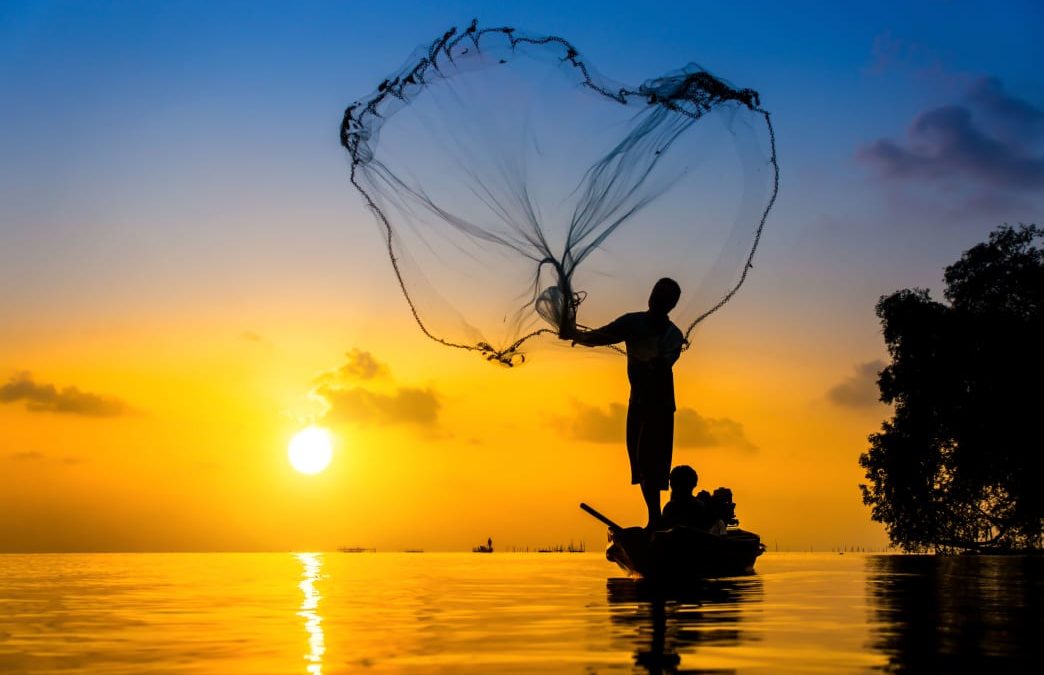
Umbrella lift-style nets work well on a variety of baitfish, too. Use lift-nets at night around bridge and dock lights, or near submerged lights used specifically for attracting fish. You can also bait tiny hooks (size 10 or 12) with bread and fish for small sunfish and wild shiners in shallow water. This might take a bit longer than other methods, but it is a proven tactic. A cast-net is another efficient tool to catch a lot of baitfish (especially shad and shiners) in short order, but it takes a bit of practice.

Regardless of the method, it is critical to check your location’s fishing regulations concerning baitfish collection and use. In some places, introducing a non-native species of baitfish into a particular body of water might be considered illegal. In others, there might be limits to the number of live baits you are permitted to keep.

While baitfish can be caught almost anywhere, it’s best to target places where they are most likely to concentrate, particularly in spots where waterways are constricted or blocked. In streams, pools, and run-outs just below shallow stretches can be prime places for baitfish to stack. Likewise, below dams (even small ones) and downstream of culverts are also baitfish hangouts.

3. Crawfish

Crawfish are killer baits for both largemouths and smallmouths.
Crawfish are killer baits for both largemouths and smallmouths. Field & Stream

Crawfish are abundant in most bodies of freshwater throughout America, and except in winter, they are easy to locate, catch, and keep alive for a wide variety of fishing. They are great baits for black bass (all species), as well as catfish. Small crawfish baits sometimes tempt walleyes, sauger, pike, and even trout—though the softshell variety is usually preferred by these species.

Crawfish can be caught several ways, with commercially-made wire mesh traps being perhaps the best and most effective method. Bait traps with meat such as chicken necks, wings, or liver, and place them in lakes, ponds, creeks, rivers, ditches, and backwater bayous. Simply tying a hunk of bait to a line will also draw crawfish. They will typically hang onto the bait long enough for you to net them.

If you prefer some hand-to-claw combat, simply wade a rocky-bottomed lake or stream and begin flipping over stones. Allow a moment for the mud cloud to dissipate and look for the brownish craws beneath. It’s best to approach a crawfish slowly from the rear or else you’ll risk having it dart off, tail-first, never to be seen again. It’s a challenging sport if using only your hands, which is why most bait-gatherers prefer small dip nets.

Crawfish can easily be kept lively for many days in a small styrofoam storage container. Be certain to place it in a cool, dry area out of the sun. Use only enough water in the container to half-cover crawfish, and add a few large stones for them to hide under. Change the water periodically and immediately remove any crawfish that die.

For a day of fishing, a small bucket with a bit of water is all crawfish need to survive. They can also be kept in a clean, aerated boat livewell.

4. Leeches

Few live baits are more effective in freshwater than leeches. All black bass devour them, and they are especially deadly on smallmouths and walleyes. Sauger, trout, sunfish, and catfish all go wild for leeches, too.

Different species of leeches can be found in almost all freshwaters, from clear western trout streams to swampy dark bass bayous in the deep South.

The time-tested way to catch them is with a small metal container like a soup or coffee can. Bait the inside of the can with chicken gizzards, a fish head, or fish viscera, then squeeze the open end of the tin can nearly closed so that larger fish don’t eat the bait before leeches locate it. Secure the can to a bush, dock, or a rock, and check it in a day or two to collect leeches.

Keeping leeches lively is easy. These baits can survive well in a bucket or small foam container with adequate clean water. Non-chlorinated tap water should be used so that the leeches don’t die. Change the water every day. They store well when refrigerated.

Use a container of water, livewell, or bait bucket to keep leeches lively while fishing. Bait containers should be small so the leeches are easier to grab.

5. Frogs

Not all states allow the use of live frogs as bait, so check your local regulations. But live frogs are deadly for bass, pike, pickerel, walleyes, muskies, catfish, and even large trout.

Catching frogs can be a messy business. Many people wade in shallow water or muddy vegetation and simply catch them by hand or with a fine mesh net.

One of the most effective ways to catch live frogs is with a fishing rod. Tie a small size 8 or 10 brightly-colored fly or tiny bream popper to a length of 15-pound-test monofilament. Frogs are voracious predators, and almost every one of them will leap quickly to gulp a bright fly or popper. This is an effective way to catch frogs day or night, and it’s fun to do, too.

Keeping frogs lively for fishing isn’t difficult. Use a standard minnow-style bait container to hold them. Just be sure to keep the bucket out of direct sunlight for long periods of time.

If stowing frogs for several days, use a very clean bucket with holes or a laundry basket. Anchor the container with rocks in the shallows of a small stream or pond, so just a few inches of water is inside. Use some sticks and weeds for cover inside the container and a lid of some type to keep raccoons and other predators out of the container.

6. Crickets & Grasshoppers

Crickets and grasshoppers are easily to collect and keep. They work well on panfish and trout.
Crickets and grasshoppers are easily to collect and keep. They work well on panfish and trout. Field & Stream

Crickets and grasshoppers are superb panfish and trout baits, and they're easy to catch and keep for fishing.

Homemade cricket traps made from plastic water or soda bottles work well. Cut off the top quarter of the bottle and invert it into the bottom. This forms a funnel trap for crickets to enter. Once inside, they cannot escape. Bait the trap with small pieces of over-ripe fruit like peaches, pears, or strawberries, and place alongside barn floors (inside or outside), in garages, or near light sources at night. You’ll usually catch crickets in short order.

If you’re more into hunting them down, grab a small tight-mesh net on a long handle (like a butterfly net) and catch crickets and grasshoppers in farm fields and buildings.

A large blanket made of wool or any fuzzy material is also helpful when catching crickets and hoppers. Simply lay it on the ground in a field on a sunny summer’s day and walk around it to drive the insects onto the blanket. The bugs get their legs caught in the blanket long enough to be captured easily.

If that doesn’t work, a small battery-operated vacuum will also do the trick. Fields, garages, old buildings, and farm structures are usually loaded with crickets, grasshoppers, and other insects. A few swipes with the vacuum will usually catch all the live bugs required for a day of trout or panfishing.

Keep crickets and grasshoppers in a small coffee can with holes punched in the lid for airflow. Place grass, cardboard pieces, a few sticks, and some fruit in the container and your baits will be happy for a long time if they’re kept in a cool, dry place out of direct sunlight.

7. Hellgrammites & Nymphs

Gather enough hellgrammites for a day’s fishing by using a seine.
Gather enough hellgrammites for a day’s fishing by using a seine. Field & Stream

Hellgrammites and large nymphs are superb baits for smallmouth bass, walleyes, and trout. They’re most efficiently caught using seines in the shallows of rocky rivers and streams. Hold your seine downstream while another angler shuffles around rocks, logs, and other bottom debris a few feet upstream. Hellgrammites and nymphs living under the rocks and debris will dislodge and tumble with the current downstream to the seine.

The seine should be checked regularly for captured baits. Toss them into a minnow-style bait bucket or container with holes.

Baits can be kept for several days, especially hellgrammites, which are hardier than standard nymph species. Stow baits in a minnow-type bucket in flowing creek water.

Written by Bob Mcnally for Field & Stream and legally licensed through the Matcha publisher network. Please direct all licensing questions to legal@getmatcha.com.

Featured image provided by Field & Stream