Turkey Hunting The Black Hills

Turkey Hunting The Black Hills

A sudden winter storm makes an already challenging public-land hunt even harder—and more rewarding

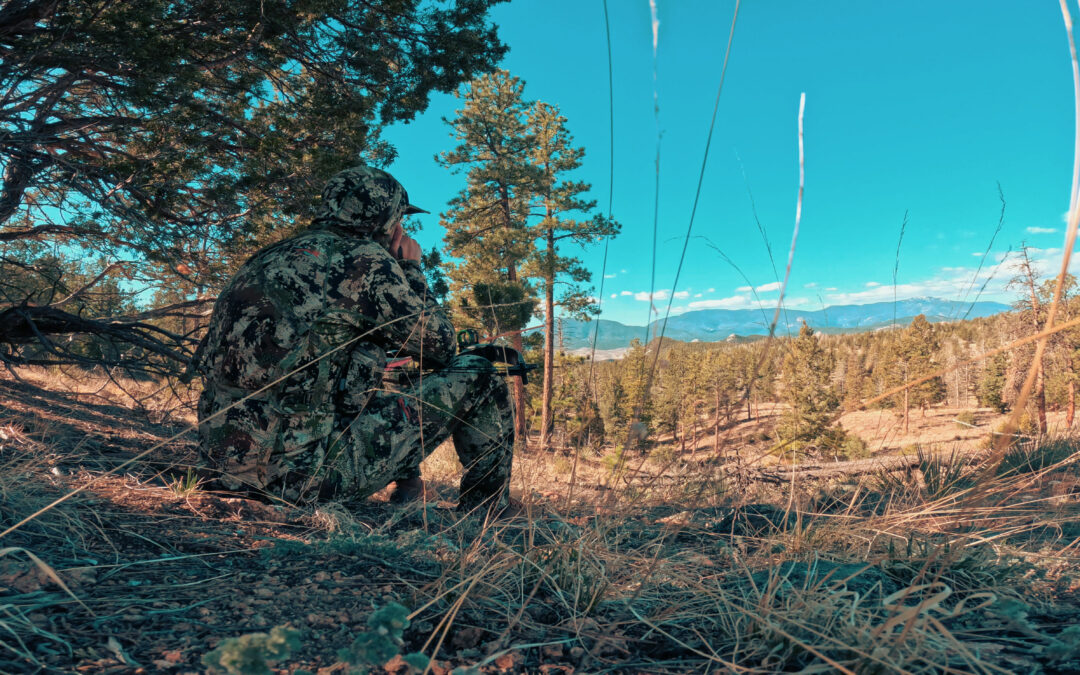
I was on my way to check one last piece of public ground for my evening hunt, when something out of place on the trail, covered with fresh snow, caught my eye: a set of turkey tracks. I hopped out of my truck for a closer look. They were small, but I hoped they belonged to a jake, rather than a hen. I grabbed my shotgun and set off to follow the footsteps like mountain lion hunters in the area had been doing a few months earlier after their quarry.

It had been a grueling day in the snow and cold of the Black Hills, but this line of prints took the bite out of the air. I crept alongside the tracks, making some quiet yelps along the way. At any moment, I expected a gobble back but didn’t hear a sound. I kept going.

Change in the Weather

I’d already had a successful spring turkey season, with an Eastern that I shot in early April and the new state-record Rio Grande that I killed with my bow not long after. To complete my South Dakota slam, I just needed a ­Merriam’s, and the Black Hills offered the best chance to get one.

As this is one of the few places in North America where all three species are found, I was in a unique position to take each bird in the same state and season. This would be my toughest turkey hunt yet, though, tackling unfamiliar public ground. The Hills are known for their abundance of birds and rough topography, both of which allow South Dakota to be liberal with its unlimited resident and nonresident tag allocation: There might be a lot of turkeys here, but they’re all hard-earned.

The Black Hills are also known for moody weather. According to the National Weather Service, Spear­fish experienced one of the most remarkable weather events in history with a 49-­degree temperature change in Dec. 1943, when the mercury jumped from minus 4 to 45 degrees in two minutes. The Köppen climate map tells a similar story, with a humid subtropic climate and a subarctic climate existing within just 50 miles of each other inside the Black Hills. On my hunt, I’d have both.

The day prior, it had been 70 degrees with clear skies. But that morning, I sat in my truck with the glow of my rearview mirror reading 25 degrees as a bland radio host warned that a foot of snow was on its way. I got out of the vehicle and stepped into total darkness. Tall pines cloaked the lights of Rapid City, and dense clouds eclipsed the moon and stars. As I started up an old logging road, the forest was dead silent. No wind, no footsteps, no songbirds and, worst of all, no turkeys. I could hear only the snow—now trending closer to ice—pelting off my hood before it began to collect in my beard. When the sun finally rose, the hills felt emptier than they did in the dark.

For two hours, I hiked the trail without hearing or seeing a turkey. I’d stop on tall ridges to glass the vast mountains, and call with hopes of coaxing a gobble. It was a fruitless hunt, and a march that only a desperate turkey hunter would make.

With these conditions, the birds were in survival mode. The blizzard drove the turkeys to bunch up and seek shelter and food near bird feeders and feedlots. With 1.2 million acres of public land at my disposal, though, the last place I wanted to see a bird was within eyesight of someone’s patio.

I stuck to the logging roads all morning and afternoon. When I’d get cold or tired, which usually took just a couple miles of hiking, I’d head back to my pickup and relocate to a new piece of ground. I did this three times, dreading the next time I’d have to get out of my truck to take my shotgun for a walk. I took the scenic route to the last trailhead, consciously getting behind schedule so I’d have more time to stay in my dry and warm vehicle. That’s when I spotted the turkey tracks.

Bearded Lady

After a quarter mile, I arrived at a steep cliff face where the tracks temporarily ended. If the turkey wasn’t on the other side of this, I figured, I’d start my descent back to the trail. Just over the crest, there stood my Merriam’s. I raised my shotgun—only to realize it was trained on the blue head of a hen. I brought the gun to my side, mumbling something about my luck with the unknowing bird at 30 yards. Accepting that this hunt was over, I kneeled in the snow and watched the hen. Then the bird turned broadside to me, exposing a 6-inch beard, making her legal to shoot with a male turkey tag. After I was absolutely certain the beard wasn’t a mirage that my greedy brain was projecting, I reshouldered my gun and touched off a concluding shot.

As I stood over the bird, I took a mental picture of the scene. This rare bird was a fitting reward to a demanding day afield—a salve for my aching feet, numb fingers, and chapped face. I’d do it all over again in a second.

Gear Tip: Shock Treatment

Shock-gobbling is a weakness in the turkey’s armor, since it gives away a tom’s location on the roost. Hunters can use this to their advantage in areas they’ve never hunted; the technique is great in big woods like the Black Hills. The most common locator calls mimic an owl or crow and are most effective just before daylight. I like the H.S. Mega Hoot Owl Call ($12; hunterspec.com), which takes some practice but makes lifelike calls. If you’re able to get a tom to answer, move in on his turf and surprise him with a couple of hen yelps at daylight.

Written by chillman for Field & Stream and legally licensed through the Matcha publisher network. Please direct all licensing questions to legal@getmatcha.com.

Featured image provided by Field & Stream
Late Season Turkey Action

Late Season Turkey Action

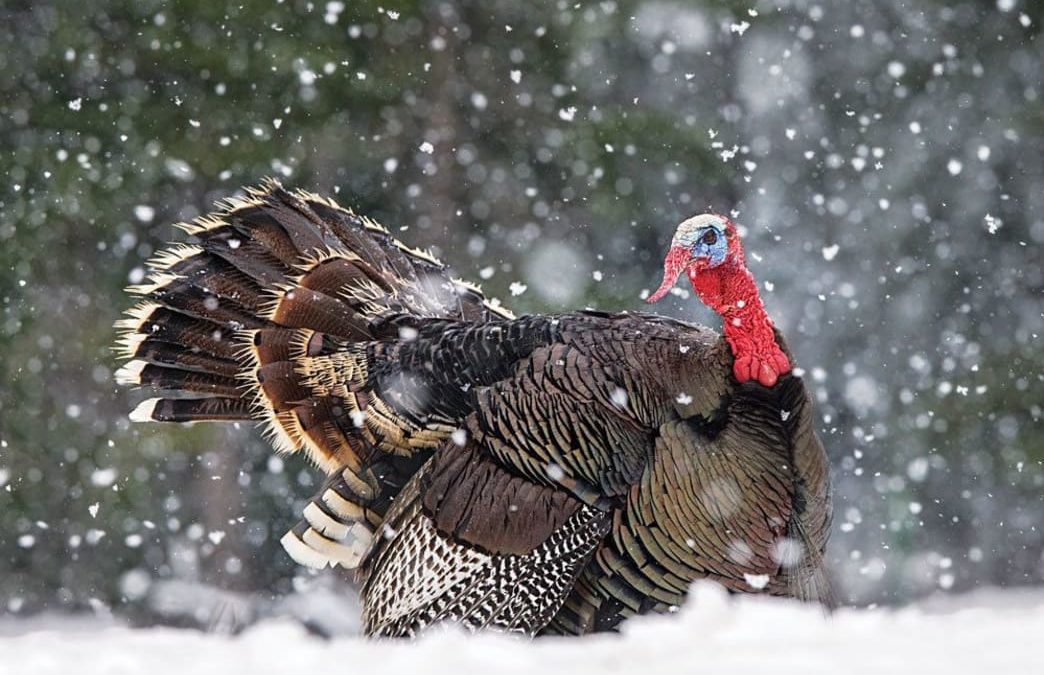
Turkey patterns constantly change during the Spring season, knowing what those are and what they might mean for your hunt can be critical in filling that tag. During the final week of May, turkeys may exhibit specific behaviors due to various factors, including breeding activity, weather conditions, and hunting pressure. Here are some key behaviors to consider during this time:

1. Breeding activity: By late May, the turkey breeding season is typically winding down, but there may still be some late-nesting hens and active gobblers. Toms might continue to gobble, but their response to calls may be less enthusiastic compared to earlier in the season. However, if you come across receptive hens, gobblers may still be in pursuit.

2. Roosting patterns: Turkeys generally maintain consistent roosting patterns, and during the final week of May, they may still be using the same roost sites as earlier in the season. Pay attention to where turkeys roost, as it will help you plan your morning setups.

3. Feeding routines: Turkeys will continue to feed throughout the day, with a focus on replenishing their energy reserves after the breeding season. Identify preferred feeding areas such as open fields, agricultural fields, or mast-producing trees. Turkeys will often travel to these locations during the late morning or early afternoon.

4. Increased wariness: As the season progresses and turkeys have experienced hunting pressure, they tend to become more cautious and wary of calls and decoys. They may be less responsive to aggressive calling and exhibit more skepticism towards decoys. Using subtle and realistic calling techniques can be more effective.

5. Adjusting to weather conditions: Weather can play a significant role in turkey behavior during late May. If the weather is warm, turkeys may adjust their activity patterns and feed more during cooler hours. Rainy or windy conditions may limit their movement and make them more likely to seek sheltered areas.

6. Changing habitat preferences: By late May, turkeys may alter their habitat preferences. They might move from dense cover used during the breeding season to more open areas, such as fields or edges of woodlands. Consider scouting to identify these transitional areas.

7. Hunting pressure impact: Turkeys that have experienced hunting pressure throughout the season can become more difficult to hunt. They might move to less-accessible areas, become more nocturnal, or change their patterns altogether. Adjust your hunting strategies accordingly, such as hunting quieter or less-pressured locations.

Observing turkey behavior in your specific hunting area during the final week of May is crucial. Spend time scouting, noting any changes in turkey activity, and adjust your hunting techniques accordingly. Adapting to their behavior patterns can increase your chances of a successful hunt during the closing days of the season.

Slayer Fang Cutter Turkey Call

Slayer Fang Cutter Turkey Call

Slayer Calls Turkey Mouth Calls are an exceptional product for turkey hunters looking for an effective and reliable way to attract game. The quality of the materials and craftsmanship is immediately apparent upon first inspection, with each call featuring precision-cut latex reeds and a durable aluminum frame.

One of the standout features of these mouth calls is their versatility. The set includes three different calls, each with its unique tone and pitch, allowing hunters to experiment and find the perfect sound to draw in their target. The calls are also easy to use, making them a great choice for both beginners and experienced hunters.

In terms of performance, Slayer Calls Turkey Mouth Calls deliver excellent sound quality. The calls produce a realistic turkey sound that is sure to grab the attention of nearby game. Additionally, the calls are designed to be durable and long-lasting, ensuring that they will hold up to repeated use in the field.

Overall, I would highly recommend Slayer Calls Turkey Mouth Calls to any turkey hunter looking for a high-quality product that delivers on both performance and durability. These calls are an excellent investment for anyone who takes their turkey hunting seriously.

Buy Now

Six Spring Turkey Hunting Locations

Six Spring Turkey Hunting Locations

There are numerous locations for spring turkey hunting across the United States, each with their own unique characteristics and challenges. Here are some of the top locations to consider.

Texas: Texas is a top destination for turkey hunting, with an abundance of Eastern and Rio Grande turkeys spread throughout the state. The terrain varies from rolling hills to open prairies, providing hunters with a diverse range of hunting opportunities.

Florida: Florida is known for its Osceola turkeys, which can only be found in the state. The hunting season is relatively long, and the birds can be found throughout the state’s varied landscapes, including forests, swamps, and agricultural areas.

Kansas: Kansas is home to both Eastern and Rio Grande turkeys, with a healthy population of birds spread throughout the state. The terrain ranges from grasslands to wooded hills, providing hunters with a variety of hunting opportunities.

Missouri: Missouri is known for its abundant population of Eastern turkeys, which can be found throughout the state’s wooded hills and river valleys. The state offers a long hunting season, and hunters are allowed to harvest two birds per season.

Alabama: Alabama is home to Eastern turkeys and has a relatively long hunting season. The state offers a diverse range of terrain, including forests, hills, and agricultural areas, providing hunters with plenty of hunting opportunities.

South Carolina: South Carolina is home to Eastern turkeys and offers a long hunting season. The state’s varied terrain includes mountains, forests, and agricultural areas, providing hunters with a range of hunting opportunities.

Ultimately, the best spring turkey hunting location depends on your personal preferences and hunting style. Be sure to do your research and choose a location that offers the type of hunting experience you’re looking for.

A Recipe for Corned Wild Turkey Breast

A Recipe for Corned Wild Turkey Breast

Served with a side of charred cabbage, this riff on a classic spring dish is a gobbler game-changer

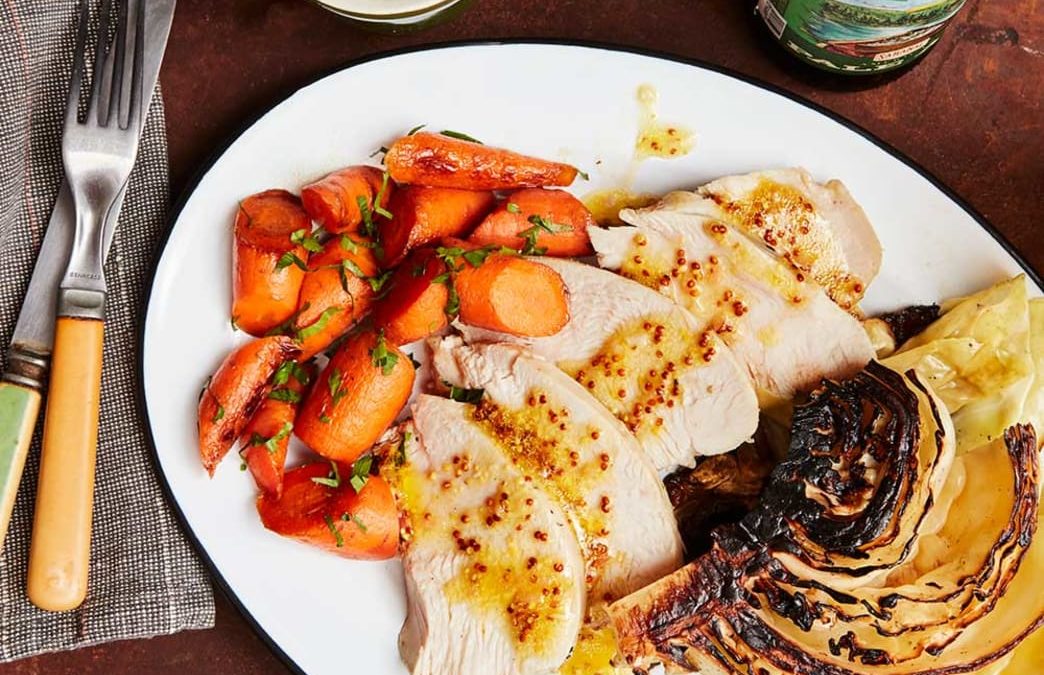
This turkey isn’t technically “corned,” or preserved, but a three-​day steep in a pickling-spice-infused brine gives it the unmistakable tang of corned beef, that springtime staple. The ­ultra-​­gentle poaching technique—​cooking the meat at less than a simmer—​yields lush, juicy turkey breast, with just a blush of pink at the center. With a crispy, smoky finish, the charred vegetable amps up the springtime feel. Adapted from a recipe by the ­Sicilian-​born chef Christian Puglisi, this slightly crazy method of cookery treats cabbage like a steak, producing a seared, flavorful edge and a tender center. Carrots with parsley or roasted potatoes would nicely round out this dish.

Ingredients | Serves 4

For the Corned Turkey

  • 1 boneless, skinned wild turkey breast half (2 to 31⁄2 lb.)
  • 1 cinnamon stick, broken into pieces
  • 3 cloves
  • 3 bay leaves, torn into pieces
  • 2 Tbsp. mustard seeds
  • 2 Tbsp. coriander seeds
  • 1 Tbsp. celery seeds
  • 1 Tbsp. fennel seeds
  • 1 Tbsp. juniper berries, crushed
  • 1 Tbsp. black peppercorns
  • 1 Tbsp. red pepper flakes
  • 1 tsp. dried thyme
  • 1⁄2 cup salt
  • 2 Tbsp. brown sugar
  • 4 garlic cloves, smashed
  • 1 slice fresh ginger, about the size of a quarter

For the Vinaigrette

  • 1 Tbsp. whole-grain mustard
  • 2 Tbsp. apple cider vinegar, divided
  • 1⁄2 small shallot, minced
  • 1⁄4 cup extra-virgin olive oil
  • 1⁄8 tsp. liquid smoke

For the Cabbage

  • 1⁄2 head of cabbage
  • 1 Tbsp. vegetable oil
  • 3 Tbsp. unsalted butter
  • Kosher salt and freshly ground black pepper, to taste

Steps to Make Corned Wild Turkey Breast

  • Make the pickling spice: ­Combine the cinnamon stick, cloves, bay leaves, mustard seeds, coriander, celery, fennel, ­juniper, peppercorns, red pepper flakes, and thyme in a small bowl, and use your fingers or a fork to mix the spices evenly.
  • Make the brine: Bring 4 cups water to a boil in a medium pot. Add the 1⁄2 cup salt, brown sugar, garlic, ginger, and 2 tablespoons of the pickling spice. (You’ll have some left over.) Stir until the salt and sugar dissolve, then allow the mixture to cool fully. Once it’s cooled, place the turkey breast and the brine in a sealable plastic bag. (The bones can puncture a bag, so double-bagging—or keeping the bag inside a bowl—is recommended.) Brine the turkey in the refrigerator for three to four days, turning the bag daily.
  • Bring a large pot of water to boil. Remove the turkey from the brine and rinse thoroughly under cold running water, brushing off most of the spice mix. Slide the turkey into the pot, and turn the heat to its lowest setting. You want the meat to cook at less than a simmer, just a very gentle poach. Cover and check the meat with an instant-read thermometer after 45 minutes. When the thermometer reads 150 degrees at the thickest part, transfer the breast to a cutting board.
  • While the turkey is poaching, make the vinaigrette: Whisk together the mustard, 1 tablespoon of the vinegar, and the shallot in a small bowl. Whisking all the while, drizzle the olive oil into the bowl until the mixture is smooth and emulsified. Stir in the liquid smoke, season with salt and pepper, and set aside.
  • Char the cabbage: Set a cast-iron skillet over high heat. Add the oil, and then add the cabbage half, cut-side down. Sear the cabbage, without disturbing it, for about 13 minutes. (If you have a vent hood, turn it on; the cabbage will smoke.)

You’re looking for a profoundly blackened surface, so don’t worry about burning it. Turn the cabbage over and reduce the heat to ­medium-​low. After a few minutes, add the butter. Once it’s melted, use a spoon to baste the blackened side of the cabbage with it, tilting the pan to get as much butter as possible. Cook this way, basting every few minutes or so, for a total of 15 to 20 minutes, or until there’s little resistance when you pierce the cabbage with a knife or skewer. Turn off the heat. Baste the cabbage with any butter remaining in the pan, then sprinkle the remaining tablespoon of vinegar over the top. Salt and pepper generously.

To serve, slice the corned turkey breast and fan the slices on four plates. Divide the cabbage into four wedges, and lightly drizzle the vinaigrette over the cabbage and the turkey breast. Serves 4

Written by Jonathon Miles for Field & Stream and legally licensed through the Matcha publisher network. Please direct all licensing questions to legal@getmatcha.com.

Featured image provided by Field & Stream