A Recipe for Corned Wild Turkey Breast

A Recipe for Corned Wild Turkey Breast

Served with a side of charred cabbage, this riff on a classic spring dish is a gobbler game-changer

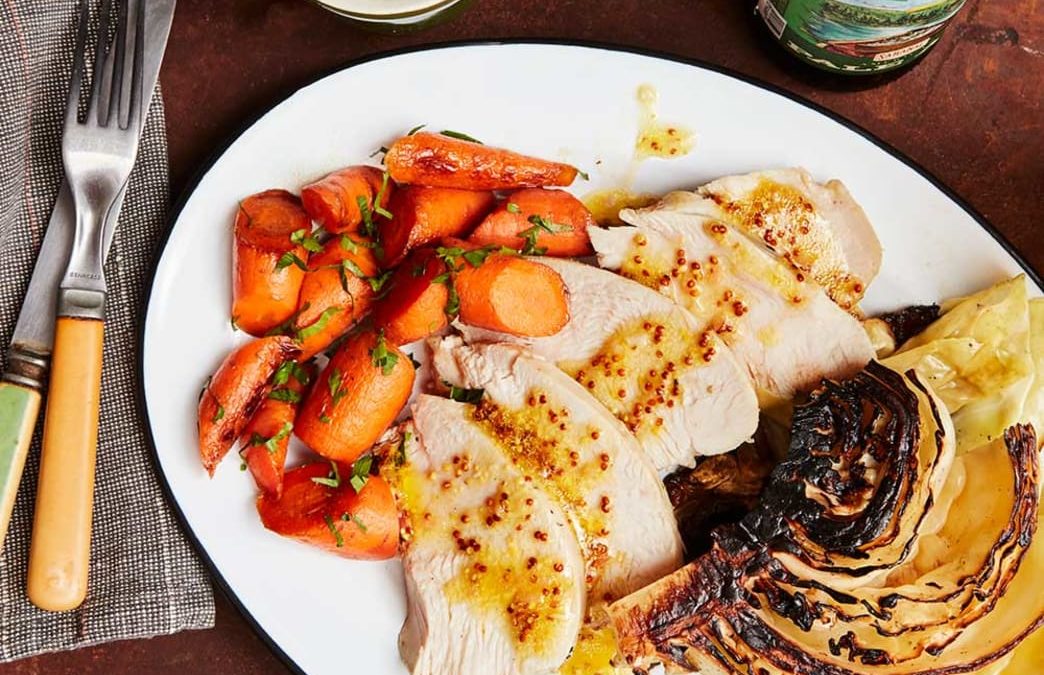
This turkey isn’t technically “corned,” or preserved, but a three-​day steep in a pickling-spice-infused brine gives it the unmistakable tang of corned beef, that springtime staple. The ­ultra-​­gentle poaching technique—​cooking the meat at less than a simmer—​yields lush, juicy turkey breast, with just a blush of pink at the center. With a crispy, smoky finish, the charred vegetable amps up the springtime feel. Adapted from a recipe by the ­Sicilian-​born chef Christian Puglisi, this slightly crazy method of cookery treats cabbage like a steak, producing a seared, flavorful edge and a tender center. Carrots with parsley or roasted potatoes would nicely round out this dish.

Ingredients | Serves 4

For the Corned Turkey

  • 1 boneless, skinned wild turkey breast half (2 to 31⁄2 lb.)
  • 1 cinnamon stick, broken into pieces
  • 3 cloves
  • 3 bay leaves, torn into pieces
  • 2 Tbsp. mustard seeds
  • 2 Tbsp. coriander seeds
  • 1 Tbsp. celery seeds
  • 1 Tbsp. fennel seeds
  • 1 Tbsp. juniper berries, crushed
  • 1 Tbsp. black peppercorns
  • 1 Tbsp. red pepper flakes
  • 1 tsp. dried thyme
  • 1⁄2 cup salt
  • 2 Tbsp. brown sugar
  • 4 garlic cloves, smashed
  • 1 slice fresh ginger, about the size of a quarter

For the Vinaigrette

  • 1 Tbsp. whole-grain mustard
  • 2 Tbsp. apple cider vinegar, divided
  • 1⁄2 small shallot, minced
  • 1⁄4 cup extra-virgin olive oil
  • 1⁄8 tsp. liquid smoke

For the Cabbage

  • 1⁄2 head of cabbage
  • 1 Tbsp. vegetable oil
  • 3 Tbsp. unsalted butter
  • Kosher salt and freshly ground black pepper, to taste

Steps to Make Corned Wild Turkey Breast

  • Make the pickling spice: ­Combine the cinnamon stick, cloves, bay leaves, mustard seeds, coriander, celery, fennel, ­juniper, peppercorns, red pepper flakes, and thyme in a small bowl, and use your fingers or a fork to mix the spices evenly.
  • Make the brine: Bring 4 cups water to a boil in a medium pot. Add the 1⁄2 cup salt, brown sugar, garlic, ginger, and 2 tablespoons of the pickling spice. (You’ll have some left over.) Stir until the salt and sugar dissolve, then allow the mixture to cool fully. Once it’s cooled, place the turkey breast and the brine in a sealable plastic bag. (The bones can puncture a bag, so double-bagging—or keeping the bag inside a bowl—is recommended.) Brine the turkey in the refrigerator for three to four days, turning the bag daily.
  • Bring a large pot of water to boil. Remove the turkey from the brine and rinse thoroughly under cold running water, brushing off most of the spice mix. Slide the turkey into the pot, and turn the heat to its lowest setting. You want the meat to cook at less than a simmer, just a very gentle poach. Cover and check the meat with an instant-read thermometer after 45 minutes. When the thermometer reads 150 degrees at the thickest part, transfer the breast to a cutting board.
  • While the turkey is poaching, make the vinaigrette: Whisk together the mustard, 1 tablespoon of the vinegar, and the shallot in a small bowl. Whisking all the while, drizzle the olive oil into the bowl until the mixture is smooth and emulsified. Stir in the liquid smoke, season with salt and pepper, and set aside.
  • Char the cabbage: Set a cast-iron skillet over high heat. Add the oil, and then add the cabbage half, cut-side down. Sear the cabbage, without disturbing it, for about 13 minutes. (If you have a vent hood, turn it on; the cabbage will smoke.)

You’re looking for a profoundly blackened surface, so don’t worry about burning it. Turn the cabbage over and reduce the heat to ­medium-​low. After a few minutes, add the butter. Once it’s melted, use a spoon to baste the blackened side of the cabbage with it, tilting the pan to get as much butter as possible. Cook this way, basting every few minutes or so, for a total of 15 to 20 minutes, or until there’s little resistance when you pierce the cabbage with a knife or skewer. Turn off the heat. Baste the cabbage with any butter remaining in the pan, then sprinkle the remaining tablespoon of vinegar over the top. Salt and pepper generously.

To serve, slice the corned turkey breast and fan the slices on four plates. Divide the cabbage into four wedges, and lightly drizzle the vinaigrette over the cabbage and the turkey breast. Serves 4

Written by Jonathon Miles for Field & Stream and legally licensed through the Matcha publisher network. Please direct all licensing questions to legal@getmatcha.com.

Featured image provided by Field & Stream

How to Hunt Public Land Ducks from a Kayak

How to Hunt Public Land Ducks from a Kayak

Many public-land hunters are used to setting up well before legal light to claim their spot. I used to motor out and set my decoys in the dark, allowing plenty of time for the marsh to settle down after I cut off my two-stroke outboard. Usually, I’d see a flurry of ducks that were gone before legal shooting light. A lot of ducks roost in the marsh areas I hunt, so even with a small motor, it was impossible to get set up without spooking birds.

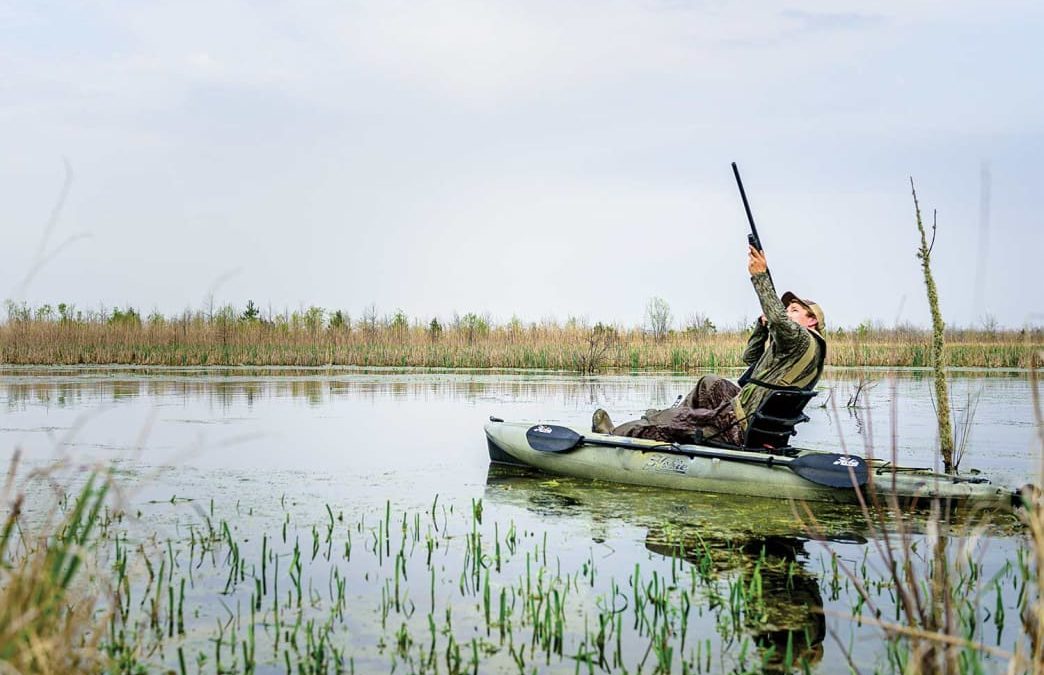
Then a few seasons ago, I had some motor trouble and went hunting with my kayak instead. What a difference it made. Now I consistently kill more ducks at daybreak by sneaking in undetected via paddle power at the last minute. ­Kayaks are fantastic craft for accessing the shallow waters where puddle ducks spend most of their time, and they are just about silent if you don’t lean into the paddles too hard. The low profile of the vessel disappears against the bank if you trace the edges of channels or creeks too.

Paddle in just before shooting time and quietly get set up. As the stroke of the clock signals the start of another hunting day, gently slap the water with the blade of your paddle. The sound will put ducks in the air without sending them to the next county, and they will frequently trickle right in to your decoys.

To take advantage of this technique, practice paddling silently on some scouting runs before the season starts. When you can get in position without spooking any ducks, you’ll know you have it mastered. Just be prepared to have less time to drink your coffee in the marsh.

Written by The Editors for Field & Stream and legally licensed through the Matcha publisher network. Please direct all licensing questions to legal@getmatcha.com.
Featured image provided by Field & Stream

Releasing a caught fish isn’t as simple as tossing it overboard

Releasing a caught fish isn’t as simple as tossing it overboard

Thanks to a burgeoning conservation ethic, many saltwater anglers choose to release their catches. Others do so because of fishery-management rules, or because it’s required in tournament regulations. As a result, anglers release many, many saltwater fish every year. But just how many?

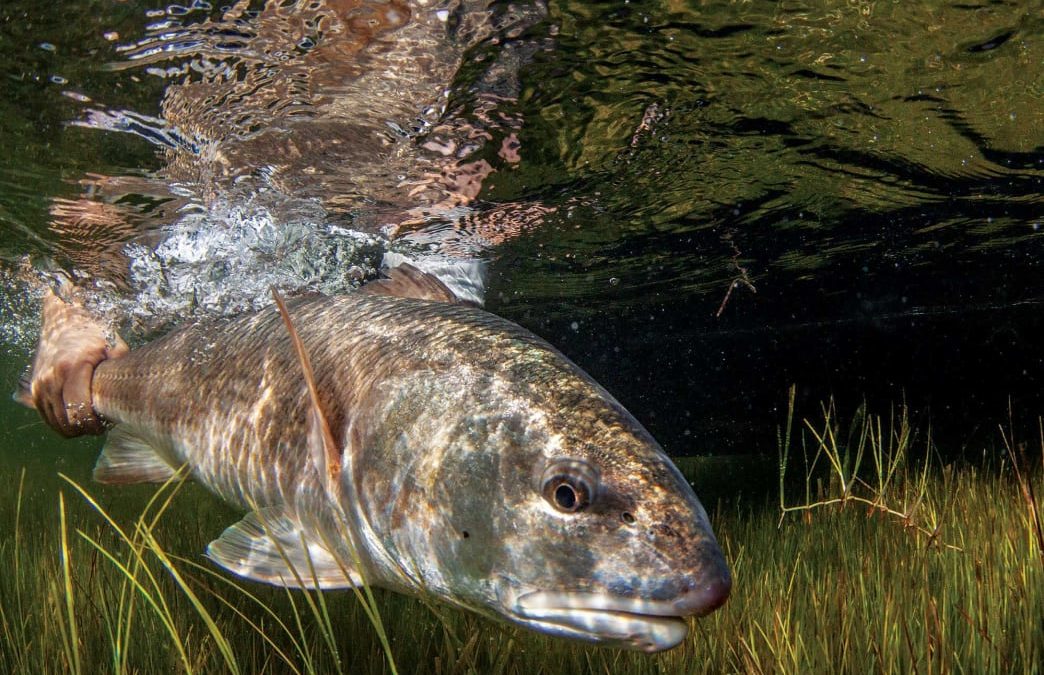
In my home state of Georgia, anglers released more than 1 million red drum during 2018, according to the Marine Recreational Information Program. For the entire United States, that number climbs to 18 million redfish released. The MRIP estimate for the number of released fish of all species during 2018 is an astounding 605 million.

While we optimistically believe that most of these fish survive, the reality is much more complicated.

Multiple factors, often combined, determine the fate of a released fish, such as how the fish was caught and handled, the fish’s environment, and ecological conditions—including predation. These interactions are unique to each species and situation.

Given the importance of the angler in this complex interaction, biologists and regulators have expended much effort to develop guidelines for catch-and-release fishing. These angling best practices, when used, markedly increase post-release survival. For many years, these methods remained simple and were based on common sense, such as handling a fish with wet hands.

Today, after hundreds of studies evaluating the effects of everything from hook type to handling devices, these best practices have evolved. The studies validate the benefits of some well-known techniques yet reveal that some methods and behaviors are more harmful than once believed.

The Point of the Matter

Hooking injury is considered a primary cause of post-release mortality. Ideally, a fish should be hooked in or around the immediate area of the mouth—lip, tongue, jaw hinge—or just inside the oral cavity. Most lures with single or treble hooks achieve that outcome. However, treble hooks also can injure a fish’s eye or result in foul-hooking.

Conventional J hooks, when used with natural or synthetic scented baits, can be swallowed deeply into the throat or digestive tract. Pulling on a hook lodged in such a location can cause injury to the heart, liver, gill arch, kidneys, stomach and intestines. Attempts to remove the hook only increase the severity of such injuries.

Research backs up the long-standing belief that removing hooks that are not easily accessible in the mouth region should be avoided. The Florida Fish and Wildlife Conservation Commission, in its guidance for fishermen, references an agency study that showed four of 12 deep-hooked snook died when anglers removed embedded hooks, compared with zero mortality when leaders were cut and hooks left intact. Fish can dislodge, expel or simply render a hook inert, especially if it’s made of a material such as bronze, which degrades quickly from the combined effects of salt water and the fish’s body chemistry.

Happily, the number of deep-hooked fish has declined dramatically in recent years due to the revival of an ancient hook design. When rigged and used properly, circle hooks penetrate the lip or jaw-hinge area, causing minimal anatomical damage yet producing a strong connection point. Furthermore, studies show that inline circle hooks—those having the point aligned with the shaft—prove most effective at reducing deep-hooking.

In a 2007 South Carolina Department of Natural Resources study, researchers compared the performance of a J hook, an offset circle hook and an inline circle hook used on subadult red drum. Inline circle hooks attached in the jaw, tongue or inside of the mouth area in 90 percent of the fish. Offset circle hooks resulted in mouth- or jaw-hooking 80 percent of fish, and J hooks, 60 percent. Inline circles also generated the lowest rate of subadult mortality: 2 percent. Researchers found similar results with adult red drum, where the circle hook performed better than the J hook.

Despite these conservation benefits, circle hooks don’t work in every angling situation. When J hooks are needed, anglers should opt to use the smallest size—in length, width and wire diameter—to minimize fish injury. They should also consider barbless versions because removing a barbed J hook usually takes longer, thereby increasing handling time.

Time Matters

Fish lead active lives chasing prey and escaping predators. At the same time, they must adapt to varying extremes in their environment. Every species has its physiological tolerances, but those tolerances have limits.

Once a hooked fish starts resisting, a stress response begins that can interfere with normal respiration and alter the fish’s body chemistry. The longer the duration of the stress response, the more likely there will be long-term or permanent negative effects.

A 2010 Florida study compared several stress-indicator blood-chemistry parameters in subadult and adult tarpon caught on hook-and-line gear with that of tarpon resting at a holding facility. Experimental treatments included holding the hooked fish vertically versus horizontally, and exposing them to ambient air for 60 seconds compared with leaving them in the water. In this study, the duration of time between hooking and landing had more effect than handling time and method on stress-indicator levels.

A fight of even short duration can exhaust a fish, impairing its ability to evade predators and carry on with life as usual. Research has shown that a significant source of postrelease mortality in tarpon and bonefish is shark predation. The time needed to recover full function varies from species to species and can be greatly influenced by factors such as water temperature.

Holding a lethargic fish in the water with its head into the current can help accelerate its recovery. Once the fish resists, release it.

The take-home message: Choose tackle that allows you to bring the fish to hand in the least amount time yet provides for the enjoyment of successfully angling the fish. When I target adult red drum, I plan to have them to the boat in five minutes or less. If you choose to use light tackle for large fish, do so with the recognition that you’re consciously increasing the chances that the fish will perish.

Landing Gear

Once anglers subdue fish, they have a responsibility to release them in the most expedient manner. Some species can be more sensitive to the effects of handling than others.

In contrast to the 2010 study on tarpon, mentioned above, a 2016 Virginia Institute of Marine Sciences study showed that removing white marlin from the water and exposing them to air had a more pronounced effect than fight duration on postrelease survival for that species. Research also has revealed that warm air can quickly dry delicate gill filaments, causing them to become nonfunctional.

If you choose to bring a fish into the boat before release, preferred options include the use of hands to lip grippers to landing nets—never gaffs. Wet, gloved hands or a handheld wet towel can effectively control small- to medium-size fish such as seatrout and bonefish but can be inadequate for larger, more vigorous animals. When using hands, always keep the fish in a horizontal position supporting its weight, and avoid any contact with the gills and eyes, which can be easily damaged.

Lip grippers, such as the BogaGrip, have steadily grown in popularity, but their design often tempts anglers to support the entire weight of the fish vertically. Research has shown that doing so can cause debilitating injury to mouth parts, internal organs and skeletal structure, especially for larger fish. When using grippers, support the fish’s weight with a hand under its abdomen.

A 2009 Australian study of barramundi (20 to 40 inches in length) handled with lip grippers provides some perspective. Researchers lifted 10 fish vertically without any additional support—all the fishes’ weight was supported by the mouth parts. Eleven were lifted in a horizontal position with a hand supporting the belly of the fish. Lifting fish using grippers without support increased the severity of mouth injury and altered the alignment of vertebrae, which did not return to normal for three weeks.

Landing nets, used frequently for small- to medium-size species, offer many advantages such as reducing fight time, controlling fish movement to allow for hook removal and preventing the fish from being dropped. Yet landing nets also can potentially harm fish by removing the protective mucus layer, dislodging scales and damaging fins.

Recognizing this, most net manufacturers offer a knotless rubber model, some with the further modification of a flat bottom to prevent fish from rolling in the net and damaging fins. Another study of barramundi in 2008 showed that a landing net of this design resulted in significantly less fin damage and abrasions when compared with a traditional knotted net.

Pressure Drop

Many species most prized by saltwater anglers live near the ocean bottom, sometimes in extreme depths. Granted, we usually pursue them as table fare, so catch-and-release is not typically the targeted outcome. But in today’s world of restrictions on size, quantity and season, releasing reef fish has become part of our new reality—as are the challenges of ensuring postrelease survival for an animal pulled up from 20 fathoms.

Species such as snappers and groupers have air bladders, which allow them to make fine-scale adjustments in their buoyancy. However, when we rapidly pull these fish from the seafloor to the surface, an uncontrolled expansion of their air bladders can cause barotrauma.

Most anglers know the symptoms: bulging eyes, stomach protruding from the mouth, a distended abdomen, and lack of equilibrium when returned to the water. When released, these fish can’t submerge, which makes them easy pickings for predators. In addition, prolonged barotrauma causes irreversible anatomical damage and extended physiological stress, often leading to death.

For many years, anglers have been advised to treat barotrauma in a fish by venting—puncturing its air bladder with a hollow needle. However, venting causes injury, creating additional stress and an opportunity for infection. If you choose to vent, be sure to do it properly. There’s no doubt venting beats simply discarding a fish with severe barotrauma, but there’s a better way.

Several devices on the market now allow anglers to lower the fish to depth, allowing it to recompress, alleviating the effects of barotrauma (visible and nonvisible). Additionally, these devices return fish to an environment of optimal conditions while hopefully bypassing some of those hungry predators. Collectively known as descending devices, these products have proved to increase postrelease survival in bottomfish.

In a 2015 Gulf of Mexico study, red snapper returned to the seafloor with a descending device fared better than fish that were vented or untreated. Survival rates for descended fish rose during summer, when sea-surface temperatures exceeded those at the seafloor. Research has also shown the benefits of descending devices for Pacific rockfish, reef fish in Australia and even walleye in freshwater lakes.

Descending devices hold such great promise for improving bottomfish survival that the South Atlantic Fishery Management Council has requested the National Marine Fisheries Service make a rule requiring anyone who possesses or is fishing for snapper-grouper species have such a device on board. If approved by the Secretary of Commerce, this requirement will go into effect sometime in 2020.

Choice or Law?

Fishery management and catch-and-release fishing succeed only when a high percentage of released fish survive. Thanks to years of study and on-water experiences, we now have angling best practices that, when followed, maximize survival chances. The quandary becomes whether to mandate the use of some or all of these angling best practices or to rely solely on voluntary compliance. Not surprisingly, angler opinion is divided.

Government entities, conservation groups and the marine industry invest vast sums of money and effort in promoting angling best practices. In some jurisdictions and fisheries, these government entities mandate the use of some types of tackle and gear or disallow certain activities.

For example, circle hooks must be used for billfish, sharks, reef fish, and striped bass in some areas and situations. Federal regulations prohibit marlin or sailfish from being removed from the water, if the fish won’t be kept. Florida law also forbids anglers from removing tarpon over 40 inches from the water.

Whether by choice or legal mandate, anglers have the responsibility to use best practices and to advocate their use to others. This might mean changing behaviors and postponing the catch of the next fish for the benefit of the one in hand. After all, a fish that survives after release is a potential future catch. And we are always looking forward to that next catch.

Tagging Tales

Determining the postrelease survival of fish caught on hook-and-line gear can be daunting. The study methods themselves—taking blood samples, marking, handling, confinement—can mask or amplify the effects of the catch.

Ideally, the fish should suffer the least amount of additional stress and be released into the same environment from which it was caught as quickly as possible. Oh, and yes, the scientist must be able to determine if the fish remains alive or dies during a minimum of 24 hours—and, ideally, for weeks, if not months.

This was once thought impossible, but not anymore, thanks to technological advances in batteries, microcircuitry and satellite communications. Acoustic telemetry and pop-up satellite archival tags (PSATs) have revolutionized scientists’ ability to document the fate of hook-caught-and-released fish.

In a 2015 North Carolina study, researchers used externally attached acoustic tags to document the fate of scamp, snowy grouper and speckled hind caught from depths of 200 feet and treated with a descending device. Previous knowledge suggested that any fish brought up from those depths perished. However, this study reported a 50 percent survival rate after 14 days, showing that recompression can increase postrelease survival in deepwater species.

PSATs have been used in multiple studies of billfish and tunas, species that are notoriously difficult to study with conventional methods. One such project using these tags on juvenile bluefin tuna revealed almost 100 percent postrelease survival, and concluded that the recreational catch-and-release troll fishery for school-size Atlantic bluefins does not represent a significant source of fishing mortality.

Best Practices

For more information about properly releasing fish, consult these resources:

About the Author

Capt. Spud Woodward retired in 2018 after 34 years with the Georgia Department of Natural Resources serving in various positions from senior biologist to division director. He is the vice chairman for the Atlantic States Marine Fisheries Commission and a member of the South Atlantic Fishery Management Council.

Written by Capt. Spud Woodward/Sportfishing Mag for Popular Science and legally licensed through the Matcha publisher network. Please direct all licensing questions to legal@getmatcha.com.
Featured image provided by Popular Science

Eight Rules of Flyfishing for Late-Summer Smallmouths

Eight Rules of Flyfishing for Late-Summer Smallmouths

Hit the water with these modified trout fly tactics to hook dog-day bronzebacks

Summer can be cruel to a devout trout fisherman. I found that out during the relentless drought of 2016. By July, flows on the Farmington River—my home water in Connecticut—were reduced to a pathetic 60 cubic feet per second. It looked more like a rock garden than a river, forcing its browns to huddle up in scattered cool-water refuges. I had no choice but to give them a rest.

Still, it was summer and I wanted to flyfish. Luckily the nearby Housatonic was there to give me a fix. It was warmer than the Farmington, but its natural flow was a bountiful 250 cfs. And it held a thriving population of smallmouth bass. Though I’d fished for “Housy” smallmouths on and off over the years, last summer I piled up my trout fishing chips and went all in on bronze. Focusing exclusively on smallmouths for an entire late-summer season gave me a true crash course in the methods and approaches that can make or break you on a summer bass wade. There are certainly similarities between targeting skinny-river smallmouths and trout, but you can forget about micro bugs and 12-foot leaders. Here are the most critical smallie lessons I learned.

Don’t Be Dainty

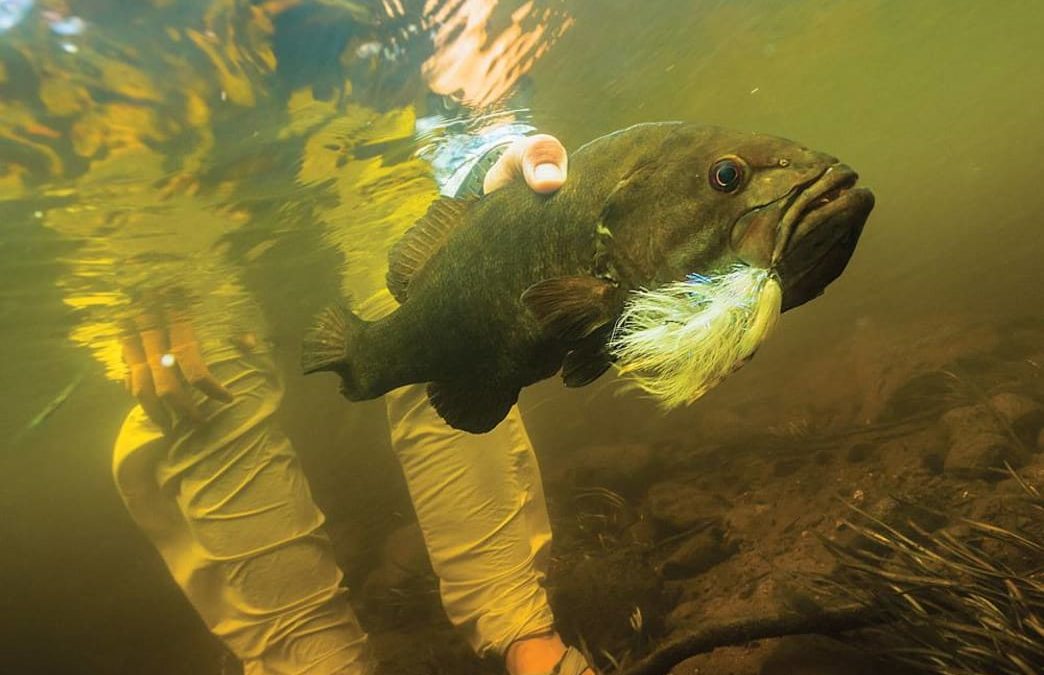
Have you ever thrown an articulated streamer into a pool of delicately sipping trout? At best, the fish will ignore it. At worst, they’ll scatter. Not so with smallies. Part of what makes them such exceptional fly targets is that going bigger, louder, and gaudier often draws more strikes when the action is slow than going dainty does. One evening, I was frustrated by a pod of bass that were taking small insects off the surface. Despite my impeccable drifts, they’d have nothing to do with my size 18 Light Cahill. Out of frustration, I tied on a big, ugly deer-hair streamer. Just before it hit the water, a 16-inch smallie exploded from below and snatched the bug clean out of the air. I was stunned. When was the last time you saw a trout do that?

Get Big and Weird

Subtle and sparse are not words commonly used to describe smallmouth flies. In-your-face is more like it. I knew smallies would hit Woolly Buggers and basic baitfish imitations, but I wanted more options. An online search led me to the TeQueely. With a flashy body, contrasting marabou tail, chartreuse wiggly legs, and beadhead, the TeQueely looks like nothing in particular, but the bass treated this mash-up pattern like their first meal in days. Aside from trying oddball flies, don’t be afraid to chuck larger patterns than you might normally use for bass to keep little smallies from attacking your bug before heavier fish can. I learned this trick from former Housatonic guide Torrey Collins. “My favorite streamer there was a rabbit-strip leech with a conehead,” Collins says. “I always tied them at least 4 inches long to get past the pipsqueak fish.”

Mix It Up

Trout will turn their noses up at anything but the perfect imitation of that moment’s hatch. Smallies don’t. That frees you up to use a variety of different patterns and presentations to see how the fish will react. During an outing, I’d switch from a conehead streamer to an old-school soft-hackled wet fly to a popper to a classic Catskills dry in the span of an hour—and I’d catch smallmouths on all four. Even when the renowned Housatonic white fly hatch was going off in August, attractor flies like an Adams or a Stimulator would get sucked down as quickly as a genuine white fly pattern. If you’re not seeing surface activity on dries or poppers in rivers with a strong crayfish population, Collins says, a dead-drifted earth-toned Woolly Bugger can be lethal. Nymphs can be fished deep along the bottom or as a dropper off a dry. No matter the approach, smallies don’t require a perfect presentation; in fact, they’ll go out of their way to chase down a meal. You’ll catch plenty of fish even if you’re lacking a bit in the accuracy department.

Fear No Frog Water

Smallmouths are ambush feeders, so unless there’s a hatch they’re keyed into, these fish are less likely than trout to hold in open runs. With that in mind, avoid featureless areas and extreme shallows. When you get to the river, target structures like downed trees, submerged logs, boulders, pocket water, and underwater ledges. One other major difference between trout and smallies is productivity in frog water. Stretches of still water tend to be worth fishing for trout only when they are rising, but that’s not the case with bass. Slow-water trout have a lot of time to look at a fast-moving fly, which makes them difficult to fool on streamers. Smallmouths are more likely to charge than study, and the reedy edges of frog water make great ambush points. Whenever you hook a smallmouth near a prime ambush point, keep fishing that area for a while, because where there’s one, there are usually more.

Work the Cafeteria Line

One of the best places to find smallies is in what I call the cafeteria line, and it’s easy to spot. Look for a distinctive foam line gathered on the surface, as such lines indicate the heaviest, deepest flow in any given section of river. This is significant, especially in the low, warm-water conditions you’re likely to encounter during the dog days. Compared with other parts of the river, the cafeteria line offers lots of dissolved oxygen, food, and cover. Focus your drifts and streamer strips through its softer edges. As long as they’re not too shallow, gravelly riffles and their dump-in points at the heads of pools are also prime smallie real estate.

Harness Magic-Hour Power

You can catch smallies at high noon, and there’s definitely something liberating about wet-wading a river on a scorching summer day. But dawn and dusk are truly magical times. Low-light conditions—particularly the first or last hour of light—turn smallmouths into reckless marauders. I’ve caught dozens of smallies at sunset in runs where I blanked a few hours earlier. In low light, you’re also more likely to encounter bigger fish that have spent the day lazily holed up. Once the sun dips behind the hills, the water temperature will begin to drop, and by dawn it will be at its coolest. It’s during these brief periods that the wise, old fish are going to grab a meal. If you must fish under the blazing sun, target shade lines from bankside trees, any area in full shadow, and deeper runs or holes.

Use a Trout Stick (With a Kick)

Last summer, I used a medium-fast-action 10‑foot 5-weight on almost every trip. Collins favors a 10-foot 6-weight or a 9-foot 7-weight. Choosing the proper setup really boils down to the flies you’ll be throwing, the size of the river you’ll be fishing, and the average size of the smallmouths you’ll be fighting. If you don’t want to bulk up your outfit, one way to keep your rod light and still throw fairly bulky flies is to fish a line that’s heavier than what’s printed on the rod’s blank. Last summer I used a long-bellied, weight-forward 7-weight floater with my 5-weight rod, and I was able to cast even larger articulated flies with ease. If you’re looking for an excuse to buy that new sealed-drag reel you’ve been eyeing, this isn’t it. Sure, smallmouths hit like a battering ram, cartwheel like steelhead, and dig in their heels like a stubborn teenager, but you won’t see your backing. My standard-issue trout reel handled every fish.

Lead With Authority

If you’ve ever been frustrated by diagrams of Euro-nymphing trout leaders, some of which require an engineering degree to decipher, you’re going to love the fact that your smallie leader can be a straight shot of 8- to 15-pound-test fluorocarbon. If you need help turning larger flies, add a simple butt section of 15- to 20-pound-test fluoro. Don’t want to build anything? Grab some 0X to 3X tapered leaders at the fly shop. For fishing dry flies, I’ll use a 7½-foot 1X leader and splice some 4X tippet to the end. The goal with any leader for any presentation is strength, not stealth, as smallies aren’t often leader shy. Your leader should be strong enough to withstand the shock of a punishing hit, and it should enable you to put enough pressure on a fish to land it quickly for a healthy release with minimum stress on the bass.

Written by Steve Culton for Field & Stream and legally licensed through the Matcha publisher network. Please direct all licensing questions to legal@getmatcha.com.
Featured image provided by Field & Stream

How I Fish: Lefty Kreh

How I Fish: Lefty Kreh

One of the greatest flyfishermen of all time shares his angling wisdom, talks about his favorite fishing spots and fish to chase on the fly, and explains his four principles of fly casting

Lefty Kreh, one of the most accomplished and beloved flyfishermen of all time, died in 2018. He was 93 years old. Kreh was a prolific author and globe-trotting angler. Among his many accolades, Kreh was the winner of the Lifetime Achievement Award from the American Sportfishing Association and a member of the IGFA Hall of Fame and Flyfishing Hall of Fame. He was also a wonderful person—kind, warm, funny, and always happy to teach others. Field & Stream’s legendary fishing editor John Merwin once wrote of Kreh: “If America can claim a national flyfishing treasure, Lefty is it.”

Here, we’re reprinting an interview Kreh gave the magazine back in 2009. His stories, humor, and fishing tips are timeless—just like the man himself.

I’ve been fishing since I was old enough to walk to the Monocacy River, near Frederick, Md. My father died when I was young, during the Depression, and my mother had to raise four children. I was the oldest, at 6. We were so poor that we had to live on welfare. I’d catch catfish on bait and sell them so I could buy clothes and food to get through high school.

After World War II, I started fly casting when I got back from Europe. (Lefty fought in the Battle of the Bulge in 1945). Back then, I got a job at the Biological Warfare Center, where we grew and concentrated the bacteria that the scientists worked on. I was one of three people who got anthrax—on my hand and arm. My full name is Bernard Victor Kreh, and there is now a BVK strain of anthrax. I was doing shift work, and I’d hunt or fish between shifts. I started to get a reputation as a hotshot bass fisherman.

Joe Brooks, the fishing writer, lived in the Baltimore suburbs, and he was writing a column in the county paper. He came down with a fly rod one day. This was in September 1947. A big hatch of flying ants was trying to fly across the river, and millions of them were falling into the water. I’m using a 6-pound-test braided silk line, and Joe pulls out this fly line that looked like a piece of rope and swished it back and forth. There were rings out there—he was using a Black Ghost streamer—and he dropped this damn thing in a ring, and boom, he had a fish. He caught almost as many bass as I did, and you don’t normally do that to a guy on his own river.

The next day I drove to Baltimore in my Model A Ford and met him, and we went down to Tochterman’s Sporting Goods—it’s still there, third generation—where he picked out a South Bend fiberglass rod, a Medalist reel, and a Cortland fly line. We went out in the park, and he gave me a casting lesson. Of course, he was teaching that 9 o’clock to 1 o’clock stuff, like everyone was.

My favorite fish to flyfish for are bonefish, absolutely. In freshwater, I like smallmouth bass and then peacock bass.

The longer you swim the fly, the more fish you catch. Gradually I evolved the method that I now teach, where you bring the rod back way behind you on the cast. This accelerates the line, lets you make longer casts and, in turn, puts more line on the water.

I started fishing for smallmouths on the Potomac, at Lander, which is below Harpers Ferry. The river was full of big smallmouths. It was fabulous fishing.

In the 1950s, I went down to Crisfield on the bay. They had a crab-packing plant there, and at the end of the day they shoved everything they didn’t put into cans off the dock. It was the biggest chum line you’d ever seen. My buddy Tom Cofield and I knew about it, and the bass were all over the place. We were using bucktails with chenille, and the wing kept fouling on the hook. On the way home, I said to Tom, “I’m going to develop a fly that looks like a baitfish, that doesn’t foul in flight, that flushes the water when it comes out into the air and is easy to cast.” That’s how I came up with the Deceiver.

The first magazine story I sold was to Pennsylvania Game News. I got paid $89. We thought it was a fortune! It was on hunting squirrels from a canoe.

I teach four principles rather than a rote method of fly casting. The principles are not mine; they’re based on physics, and you can adapt them to your build. They are: (1) You must get the end of the fly line moving before you can make a back or forward cast; (2) Once the line is moving, the only way to load the rod is to move the casting hand at an ever increasing speed and then bring it to a quick stop; (3) The line will go in the direction the rod tip speeds up and stops—specifically, it goes in the direction that the rod straightens when the rod hand stops; and (4) The longer the distance that the rod travels on the back and forward casting strokes, the less effort that is required to make the cast.

My most memorable flyfishing experience was in New Guinea. There’s a fish there called a New Guinea bass—they spell it N-I-U-G-I-N-I. They are the strongest fish I’ve ever seen in my life.

My three favorite flyfishing spots in the world are Maine for smallmouths, Los Roques off Venezuela for bonefish, and Louisiana for redfish. The marsh near New Orleans is over 20 miles wide and 80 miles long. There’s very light fishing pressure, and it’s absolutely the best redfishing anywhere.

The three most important fly casts are the basic cast —you have to learn to use a full stroke; a roll cast, because you use it for all kinds of things; and the double haul. You need to learn how to double haul.

Up until seven, eight years ago, you couldn’t get into flyfishing if you didn’t have a lot of money. Now we have fabulous rods. If you buy any rod today that costs more than $100, it will probably cast better than the person who buys it.

Written by Jay Cassell for Field & Stream and legally licensed through the Matcha publisher network. Please direct all licensing questions to legal@getmatcha.com.

Featured image provided by Field & Stream